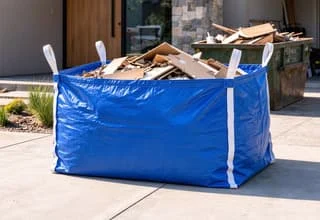
Dumpster Bag
A heavy-duty open-top bag for construction, yard and mixed waste, lifted by four loops or handled by fork sleeves. It…
View product →QINFENG Custom FIBC manufacturer since 2001
Dust-free drop from
220 GSM Cut to the drop
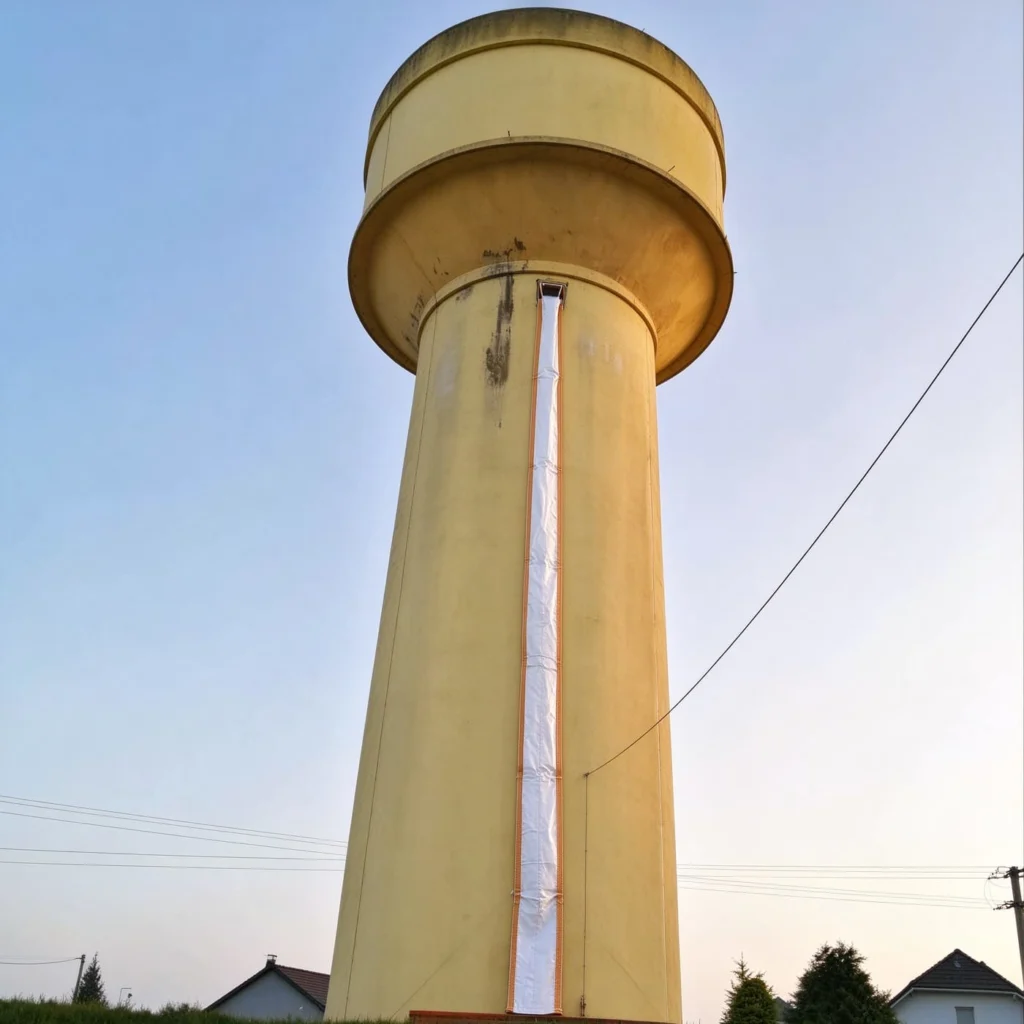
Why use a PP Rubble Chute
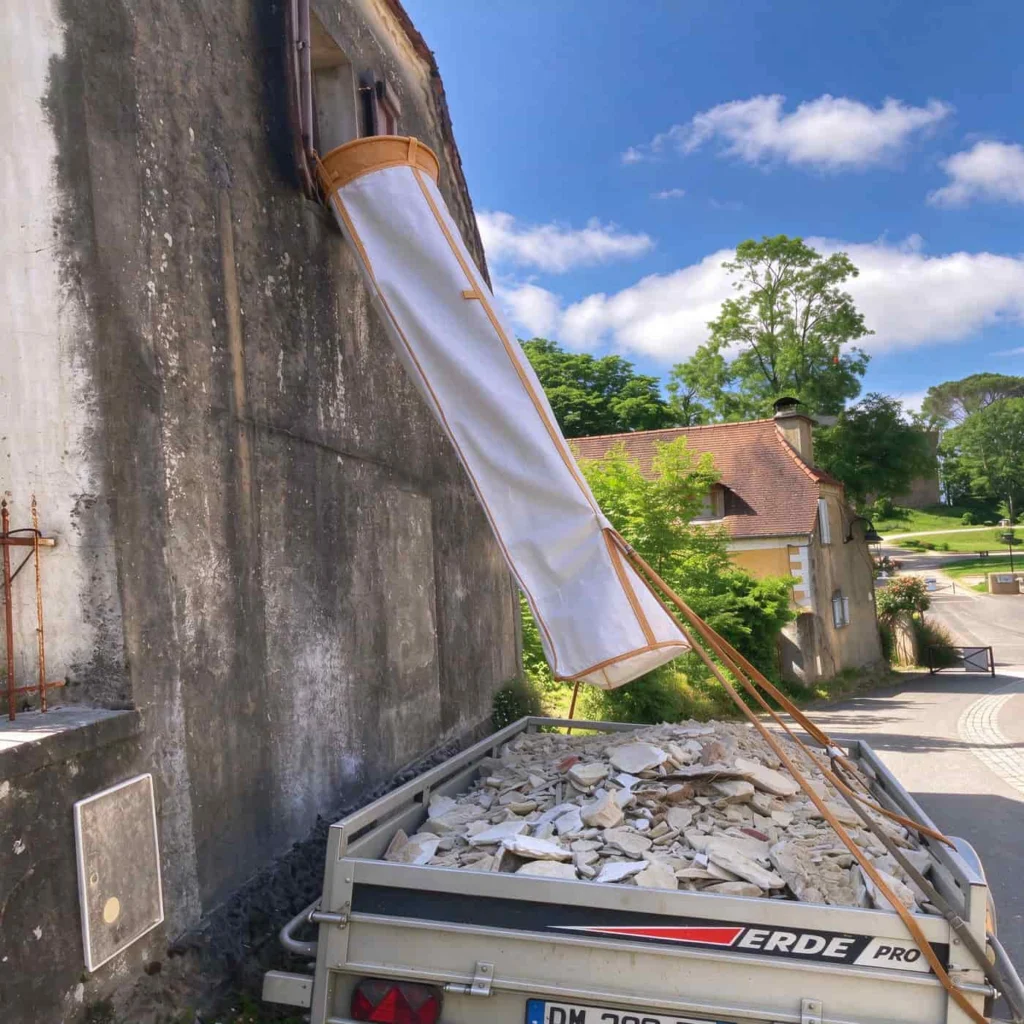
A flexible woven PP chute for rubble, roof gravel, timber, tiles and other construction waste. It is positioned from a working level down to the collection point — the skip, truck or container standing below.
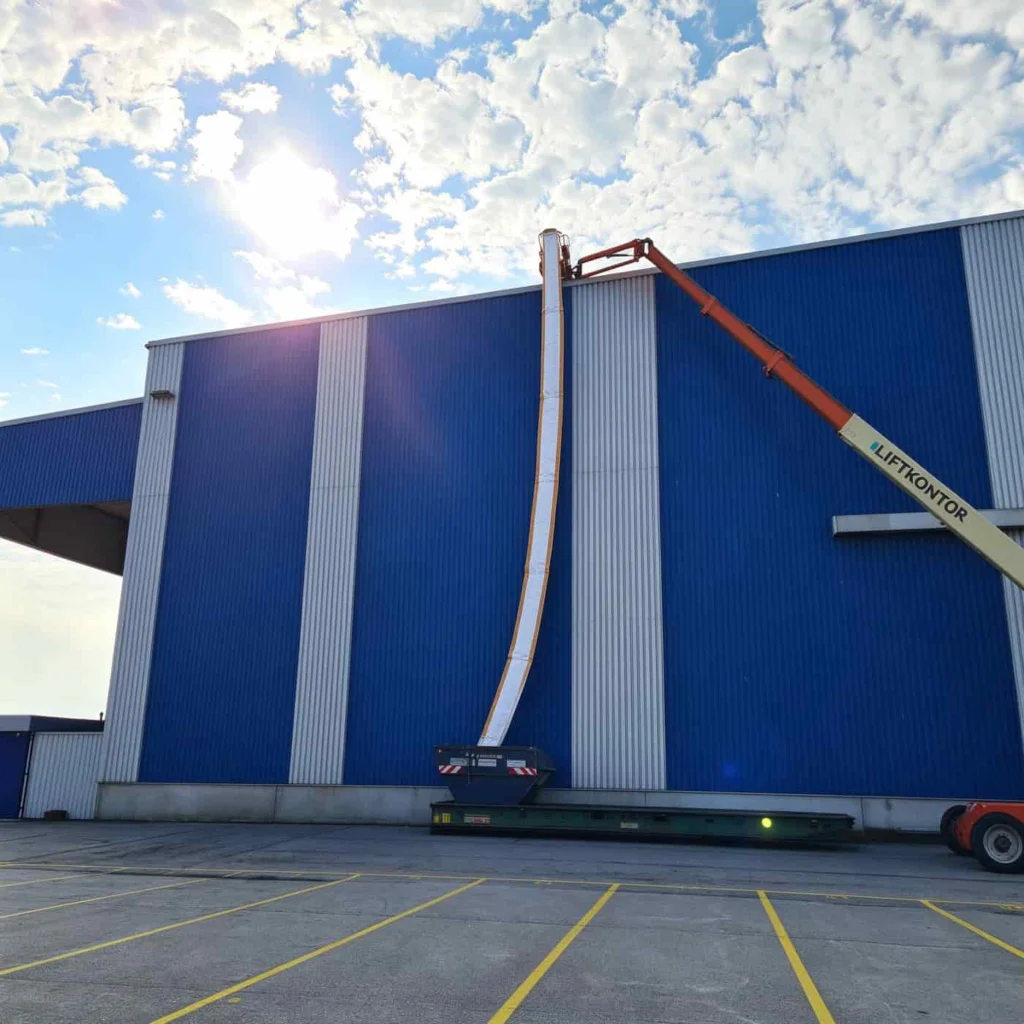
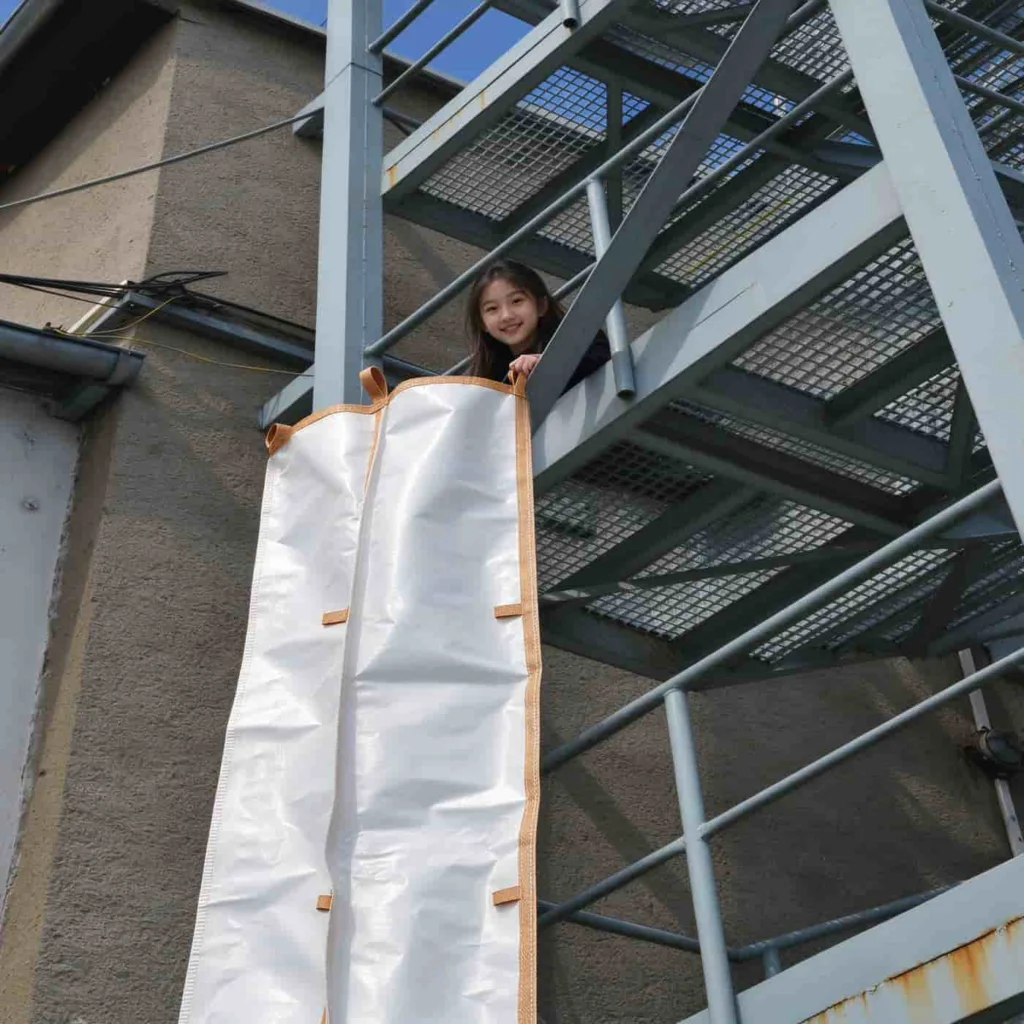
The standard chute comes as a 3-metre section. Two, three or more join with the cable ties supplied until the run reaches the height of the drop, and the last section is cut down where the bay is lower.
Where a join is not wanted, the chute is woven as one continuous piece in the length the drop needs — 20 metres and 80 metres have been made that way.
How it is set up on the bay
A disposable woven chute that carries product from an FIBC outlet down to a truck or hopper without dust or breakage.
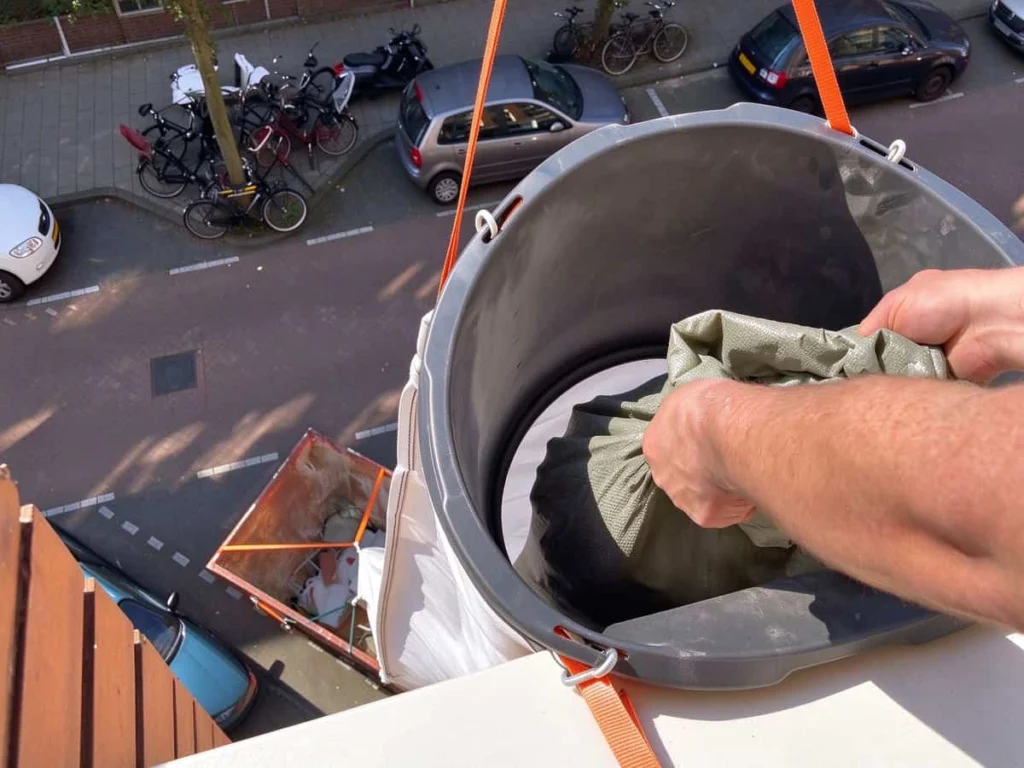 01
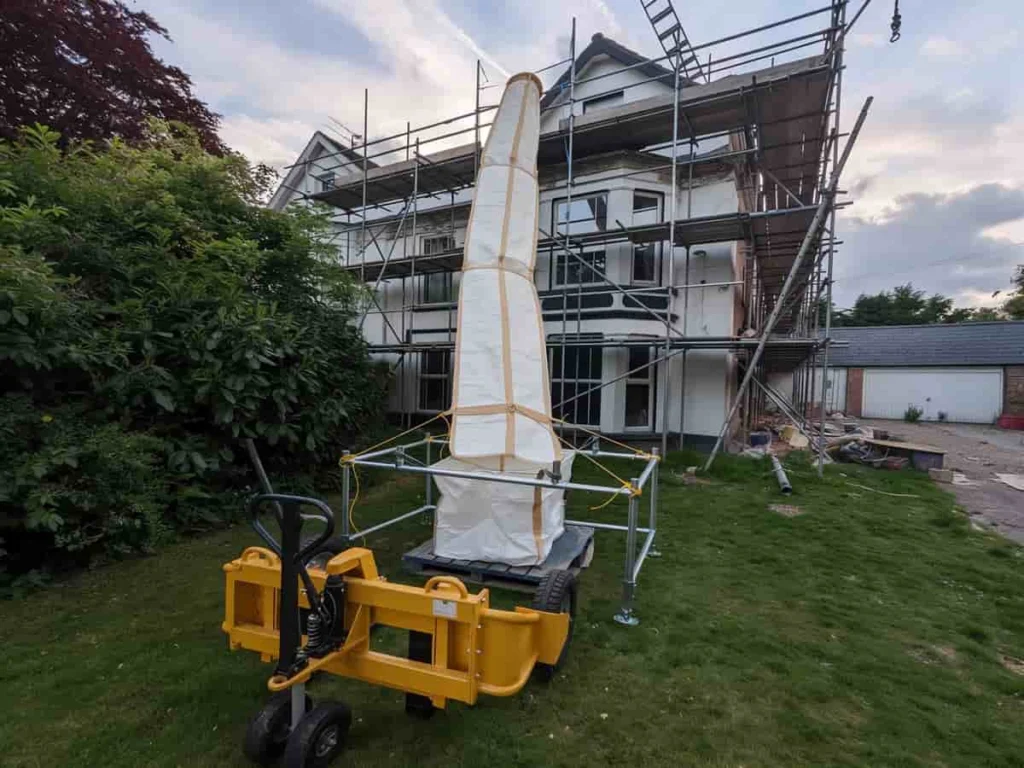
The chute is supported at the top by a filling funnel — the rigid funnel the top end seats into, so the mouth stays open while the product is fed through it.
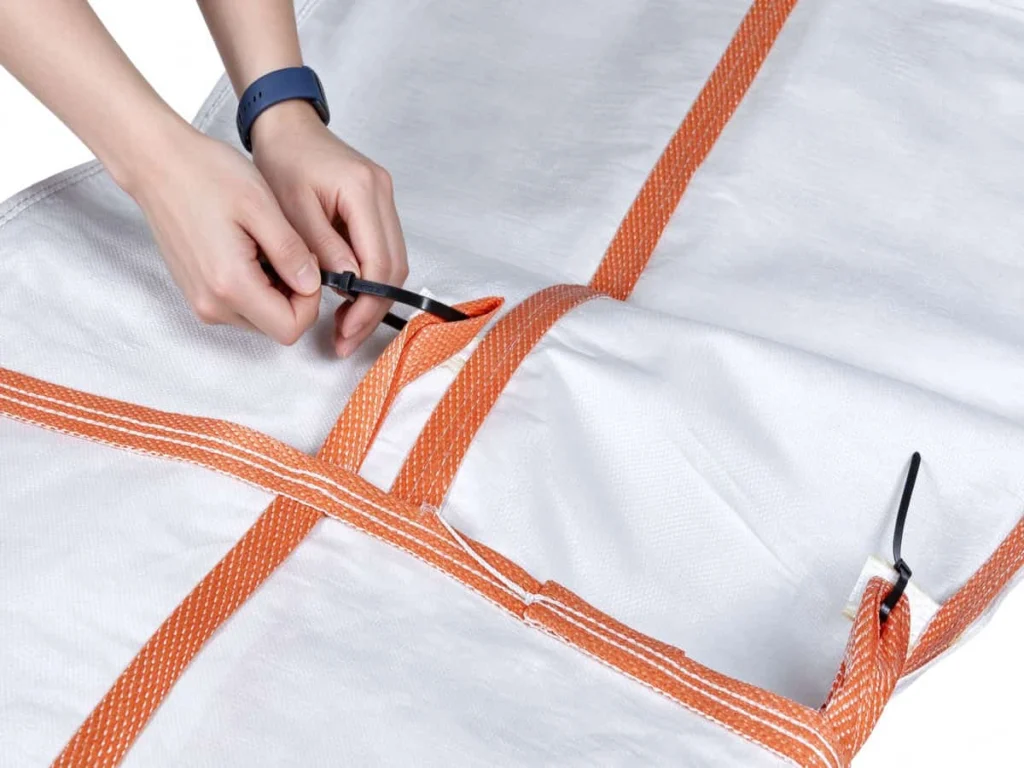 02
Where the drop is taller than one length, the bottom of one chute joins into the top of the next — two sections, three, as many as the height needs — and the cable ties come with the chute.
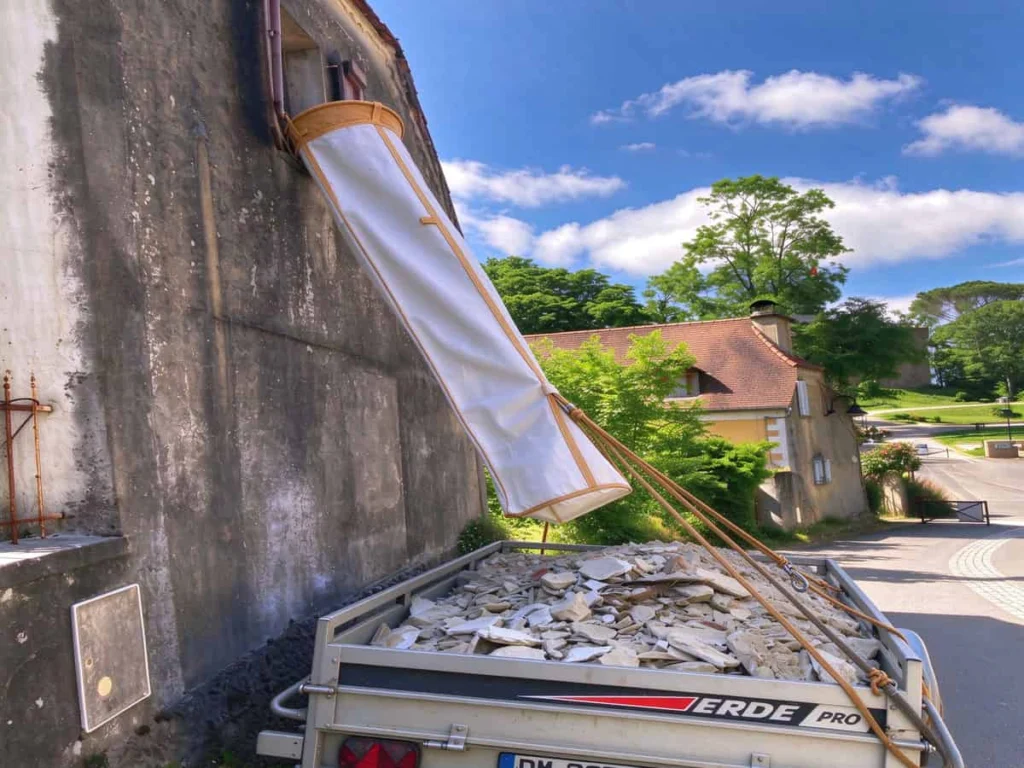 03
A rope at the bottom ties the chute to the skip or bin it discharges into, so the end stays where it is aimed while the load comes down.
PP rubble chute vs a steel rubbish chute
| PP Rubble Chute Clipped to the outlet | A length arrives folded and goes up on one shoulder | Ties or clips onto the bag outlet — no brackets, no tools | Tied onto the outlet, so the product travels inside the tube | A consumable, bought for the job and left with the load |
|---|---|---|---|---|
| Steel rubbish chute Bolted in place | Rigid steel sections, lifted and lowered one at a time | Hung on brackets or chained to the structure before the first load | Open at the top, so the dust leaves where the product is tipped in | A capital item, recovered, cleaned and stored between jobs |
| Compared on | Weight and handling | Setting it up | Dust at the outlet | What you buy |
Cut to the drop height and the flow rate of the product; the diameter follows the outlet spout it has to fit.
Applications
Wherever material has to come down from a height and the container is already on the ground, a tube is the shortest way to get it there.

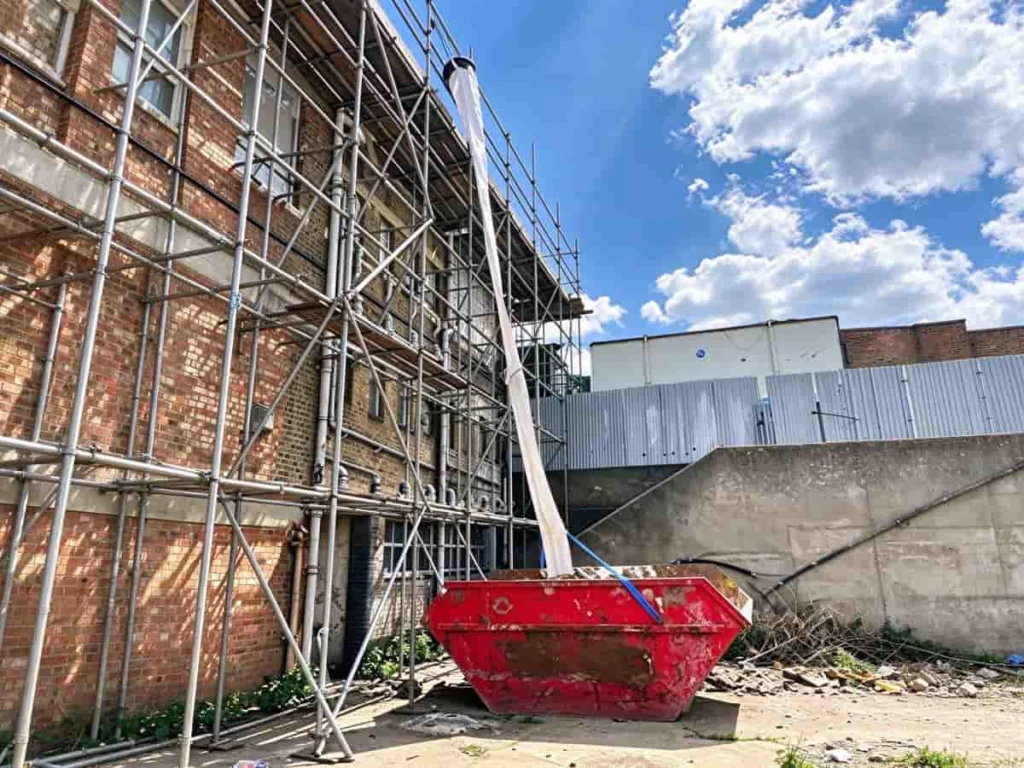
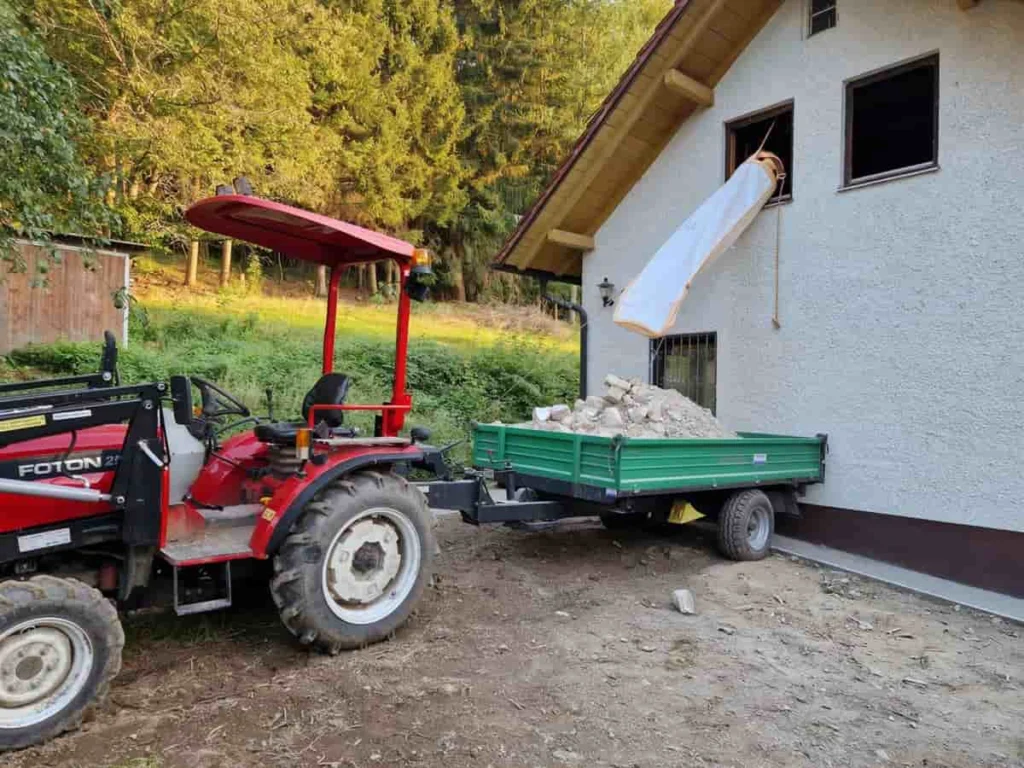
Spoil, offcuts and broken concrete from an upper floor or a scaffold level go down into the skip standing below, instead of being carried down by hand.
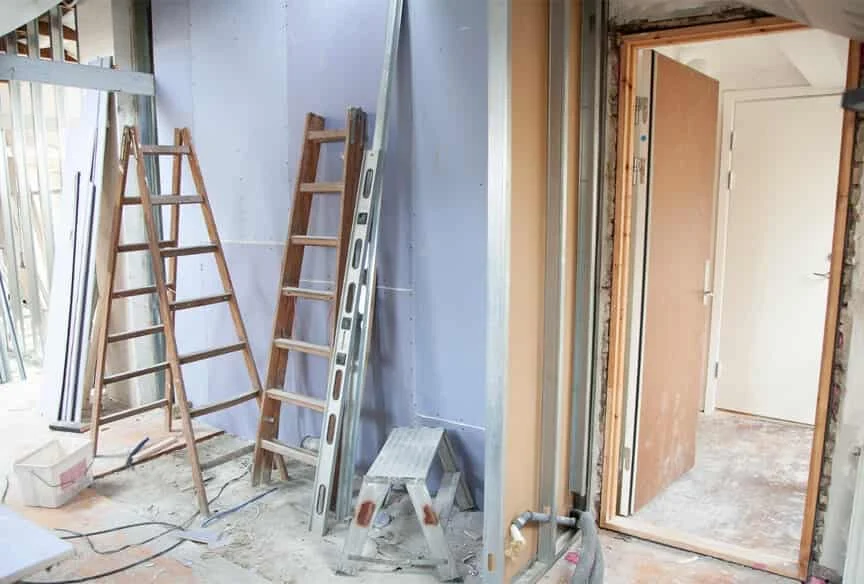
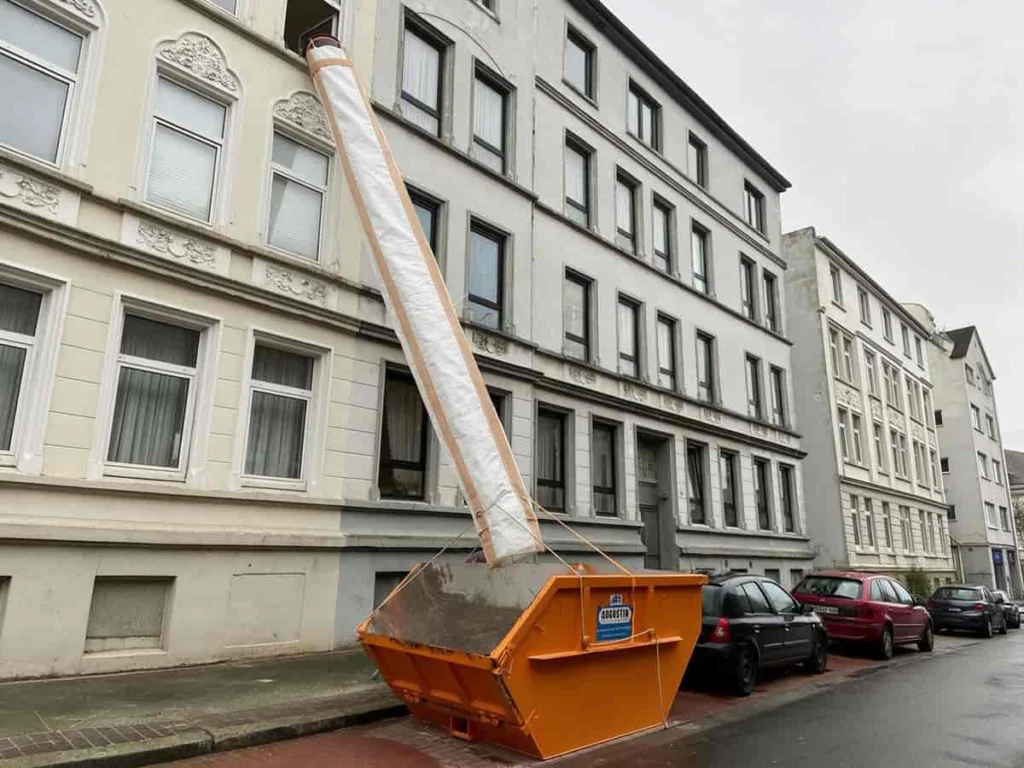
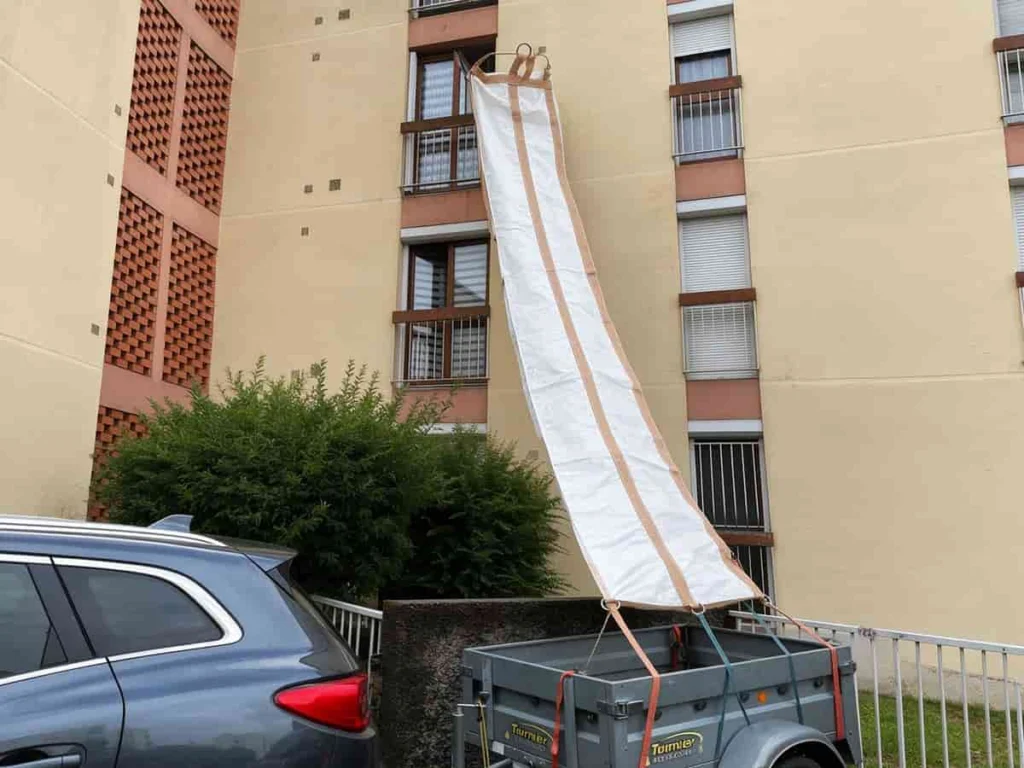
Strip-out from a flat or a single room — old units, tiles, plaster — goes down into the container, with the dust kept inside the tube rather than the stairwell.
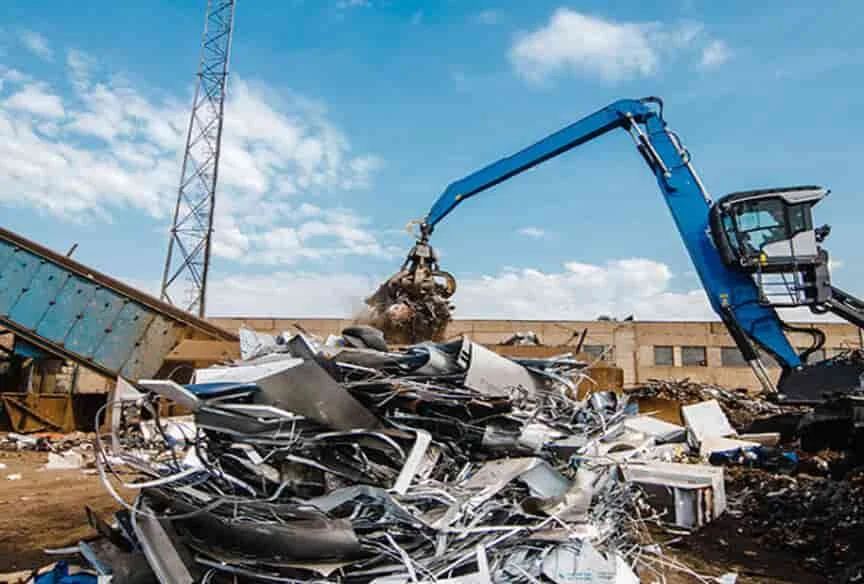
From a sorting table or a bag-opening station down into the collection container, so the fine fraction stays in the chute and off the floor.

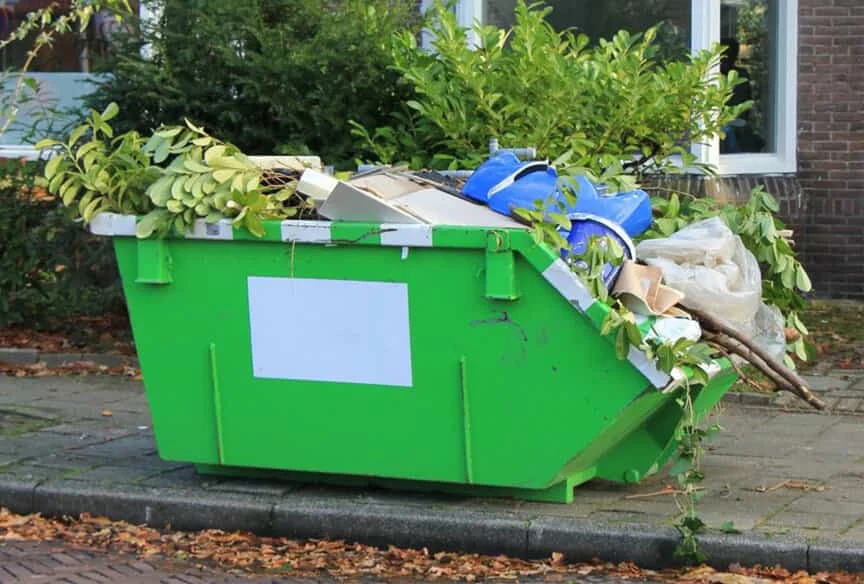
Soil, grass clippings and plant waste from a raised bed, a roof terrace or a trailer deck go down into the bin, the skip or the pile.
From a hopper or a bulk bag outlet down to the floor, keeping dust away from the machinery and the walkway beside it.
Step by step
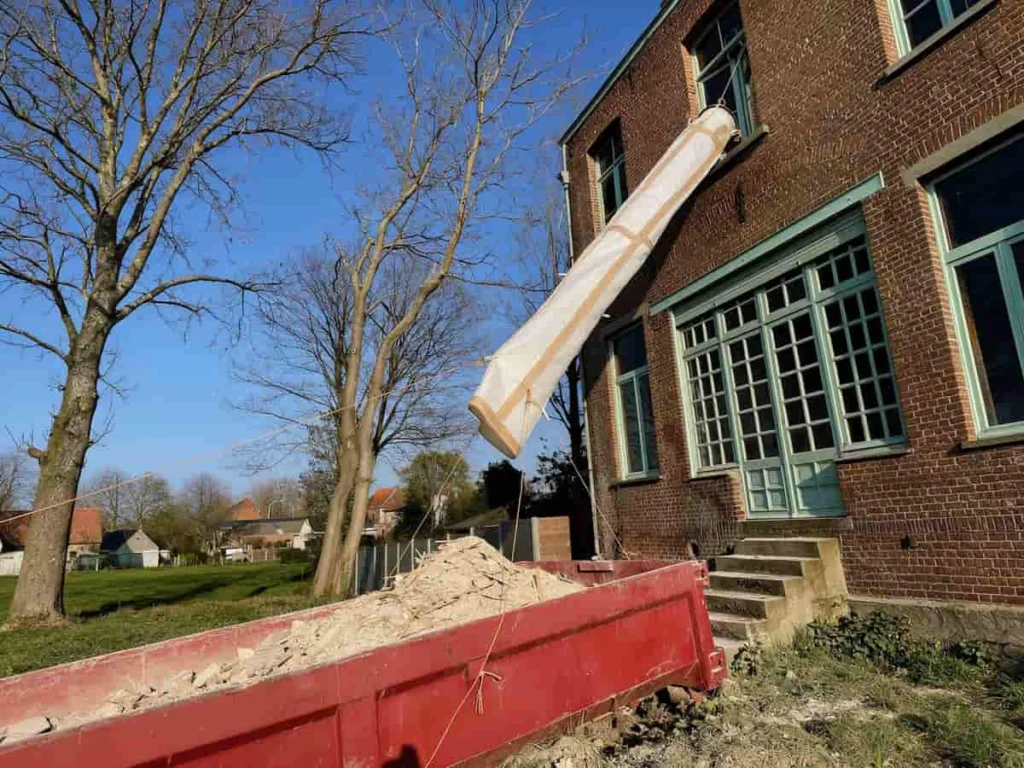
The chute's loops snap onto the hooks of the filling funnel, so the mouth stays open and the chute hangs straight without tools. It can be tied straight to the outlet instead, but nothing holds the mouth open while it is loaded.
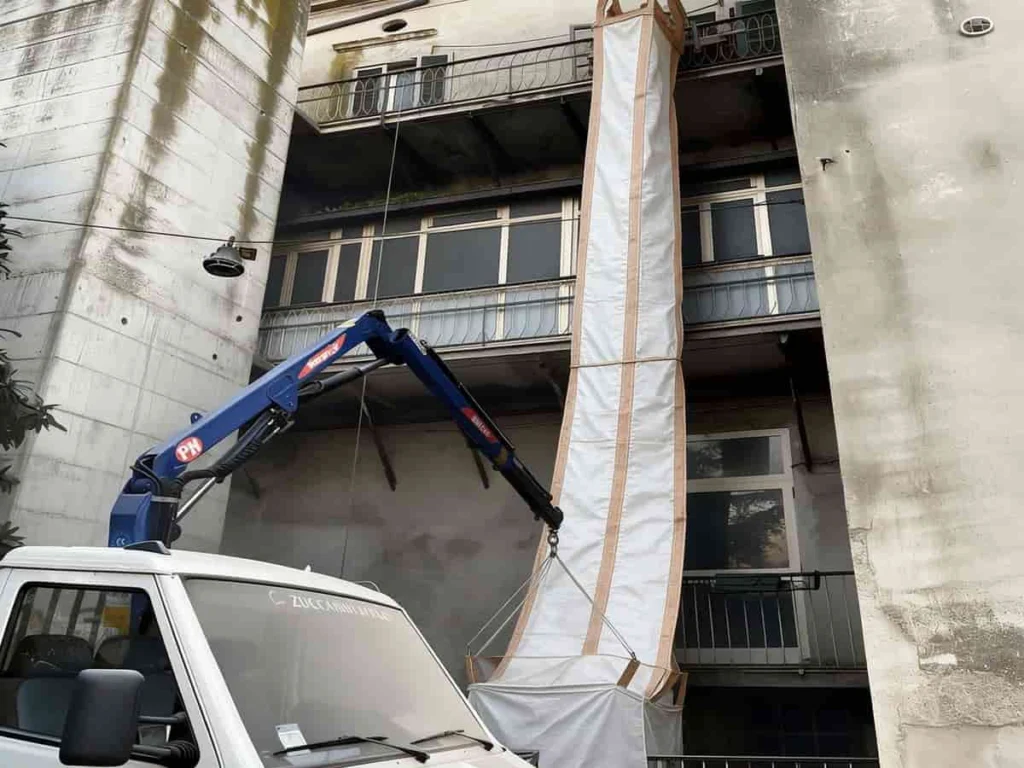
Sections join with the cable ties supplied — three metres each, one per storey, and two, three or more of them added until the run reaches the height of the drop. Where the bay is lower, the last section is cut down. A chute woven in one continuous length needs no join at all.
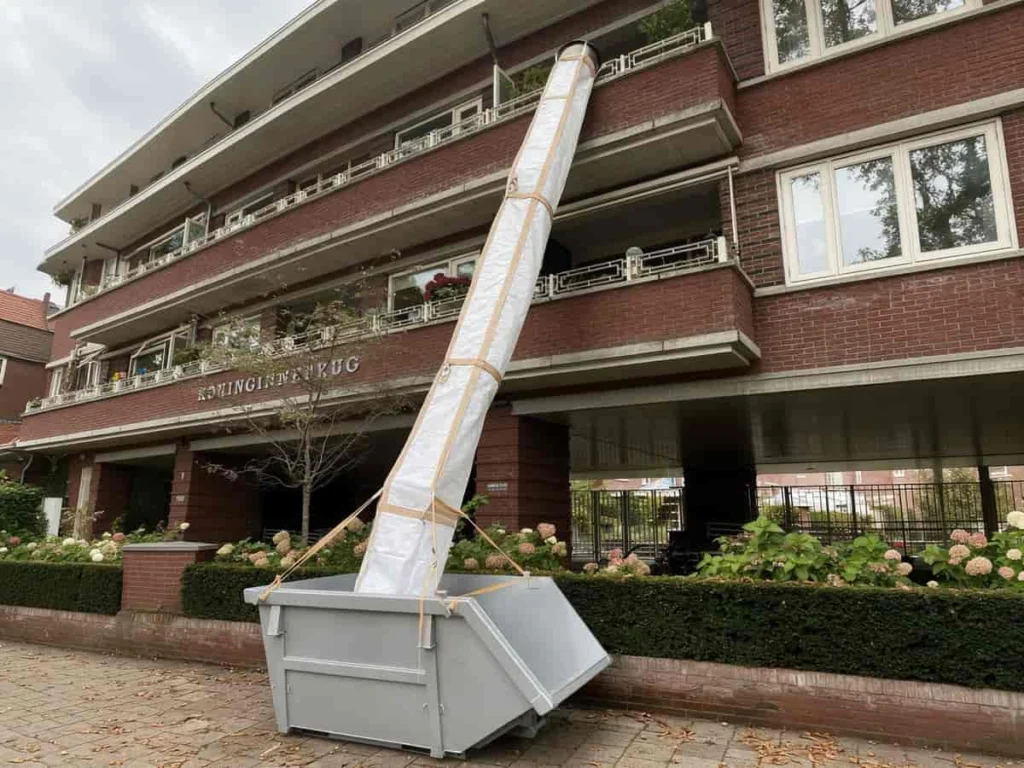
Take the chute into the storey it starts from and lower it outwards. Fasten the funnel — or the chute's own top — with a rope or lashing strap to a window frame, balcony, downpipe or another fixed point, so the run stays where it was set.
Hang the open end no more than 50 cm above the skip, barrow or other container — not higher. Keep the run as vertical as possible and free of kinks, then tip the rubble in by bucket, barrow or by hand.
Our quality efforts
On site
Loading, lifting and standing full — the conditions the specification is written for.
1 / 8
Our fabric. Your drop.
Specialty bags
A heavy-duty open-top bag for construction, yard and mixed waste, lifted by four loops or handled by fork sleeves. It…
View product →
A woven bag with mesh panels or a perforated body so air moves through the load. It is specified for…
View product →
A woven bag made with geotextile fabric so water drains out while the solids stay in. It is sized from…
View product →
A fabric bag placed where concrete wagons are washed out, so solids settle and the water can be handled separately.…
View product →More factory assist
Send the drop height, the outlet spout diameter and the product, and the specification comes back with a price.
Open the form →Tubular, U-panel, four-panel and baffle bags against each other, with the trade-offs stated.
Selection guide →Fabric weight, base reinforcement, stitch counts and filled dimensions, checked batch by batch.
Quality control →Questions that do not fit a form: dimensions, loading method, or whether a bag is the right container at all.
Contact us →For distributors, hire and municipal buyers
A disposable woven chute that carries product from an FIBC outlet down to a truck or hopper without dust or breakage.
Request a quote