Mesh panels let a load still curing lose moisture
Set by the venting pattern and the solid fabric left
One or two loops concentrate the load, so the rating is lower
Filled on site by hand or by loader, with no weighing line to check the fill.
THE 4 PACKAGING RISKS THAT DECIDE THE SPEC IN LANDSCAPING & HORTICULTURE.
Green waste, timber and soil come off a landscaping round in bulky, light loads filled on the ground. These are the four risks the filed workflow names.
A Solid Bag Makes Green Waste Sweat
Green waste and wood still lose moisture; a solid bag traps it and the load arrives wet.
Product Falling Out Of The Vents
Too open an aperture lets small pieces escape, and mesh gives less rain and dust protection.
A Central Lift Changes The Load Path
One or two loops carry the whole load through one anchorage, so no dragging or side pull.
Stockpiled In The Open, Then Moved
Filled bags stand in a yard for weeks, where rain adds weight and space is limited.
ENGINEERED FIBC CONSTRUCTIONS FOR LANDSCAPING & HORTICULTURE.
Open-top collection bags for green waste, timber and soil, vented bags for loads still curing, and a central-lift bag.
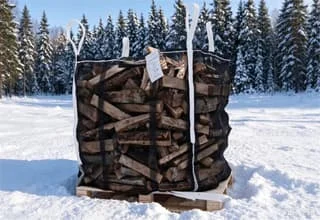 600 x 400 px
Air Flows Through the Panels
Ventilated FIBC
A woven bag with mesh panels or a perforated body so air moves through the load. It is specified for produce, wood and other materials that must not sweat in storage.
- Size: 1 m³: 100 × 100 × 100 cm · 1.5 m³: 100 × 100 × 150 cm
- Ventilation options: 4-side mesh · 2-side mesh + 2-side ventilated fabric · 4-side ventilated woven fabric
- Mesh aperture: Standard woven mesh apertures
One-Loop / Two-Loop FIBC
A bag lifted from one or two central loops instead of four corner loops. It suits light to medium loads handled by a single hook or crane where loop alignment is the operator's main…
- Size: 75 x 75 x 100 cm to 95 x 95 x 120 cm (typical)
- SWL / Safety Factor: SWL 250-1,000 kg
- Lifting loop: Single central loop or two parallel loops
SPECIFIC APPLICATIONS & PROCESS FLOWS.
The collection setups written up for landscapers, grounds-maintenance and tree-work crews.
Garden & Construction Waste Collection
Collecting garden and construction waste in bulk bags: heavy, mixed, sharp-edged loads moved by skip-hire operators, landscapers and site contractors.
TESTING, COMPLIANCE & QUALITY ASSURANCE.
What the landscaping workflow asks us to hold to, and how it is checked.
1. Requirements & How We Verify Them
| Venting Pattern And Mesh | Fabric and mesh weight, panel stitch counts and mesh attachment checked per batch. |
|---|---|
| Aperture Against The Product | Mesh aperture follows the product size you supply, so the load stays in. |
| Loop Anchorage | On a central-lift bag, loop stitch counts and top-seam pull are checked; the rating assumes no side pull. |
2. The Configuration Range We Quote
| Ventilated FIBC · Size | 1 m³: 100 × 100 × 100 cm · 1.5 m³: 100 × 100 × 150… |
|---|---|
| Ventilated FIBC · Ventilation options | 4-side mesh · 2-side mesh + 2-side ventilated fabric · 4-side ventilated woven fabric |
| One-Loop / Two-Loop FIBC · Size | 75 x 75 x 100 cm to 95 x 95 x 120 cm (typical) |
| One-Loop / Two-Loop FIBC · SWL / Safety Factor | SWL 250-1,000 kg |
Each row is the range its product record states; the confirmed figure is set per project.
Landscaping & Horticulture Quotation Checklist
- 1. Waste mix and sharpness:
- What actually goes in the bag - green waste, timber, rubble, metal - since sharp contents drive the fabric choice.
- 2. Typical and maximum fill weight:
- How much the operator fills by eye, and the heaviest load the bag must survive.
- 3. Lifting method:
- Forklift, crane or lorry-mounted loader, and the loop spacing the equipment needs.
- 4. Storage and exposure:
- How long the bag sits full outdoors, and whether it is reused.