Fabric weight and panel count follow the waste mix
Rated for the dense loads a waste bag carries
Uncoated woven PP, which drains and resists abrasion
Bags are dragged to the lift point, so the base and the loops take the wear.
THE 4 PACKAGING RISKS THAT DECIDE THE SPEC IN WASTE & RECYCLING.
Waste bags fail differently from product bags: the load is sharp, filled by eye and dragged before lifting. These are the four risks the workflow names.
Sharp Waste Cuts From The Inside
Metal, glass and rubble puncture from within, and loading from height cuts any woven body.
Dragging A Loaded Bag
Dragging a loaded bag across concrete wears the base faster than any other step.
Filled By Eye, Not By Weight
Waste is filled by eye, so the marked SWL must be conservative for the mix, and wet waste adds weight.
Rain, Weight And The Lorry Bed
Loaded bags stand in a yard for weeks, take rain, and are lifted on a base knocked about.
ENGINEERED FIBC CONSTRUCTIONS FOR WASTE & RECYCLING.
Heavy-duty open-top bags for mixed waste, a washout bag for concrete wash bays, and a vented bag for green waste losing moisture.
 600 x 400 px
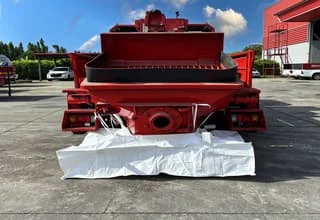
Keeps washout out of drains
Concrete Washout Bag
A fabric bag placed where concrete wagons are washed out, so solids settle and the water can be handled separately. It keeps washout out of drains and site ground; the water rules remain the…
- Size: 80 x 80 x 80 cm to 100 x 100 x 100 cm (typical)
- Fabric: Woven PP body with a porous base panel
- Top: Open top, reinforced, with a splash skirt
 600 x 400 px
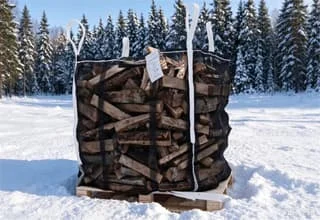
Air Flows Through the Panels
Ventilated FIBC
A woven bag with mesh panels or a perforated body so air moves through the load. It is specified for produce, wood and other materials that must not sweat in storage.
- Size: 1 m³: 100 × 100 × 100 cm · 1.5 m³: 100 × 100 × 150 cm
- Ventilation options: 4-side mesh · 2-side mesh + 2-side ventilated fabric · 4-side ventilated woven fabric
- Mesh aperture: Standard woven mesh apertures
SPECIFIC APPLICATIONS & PROCESS FLOWS.
The collection setups written up for skip-hire operators, site-clearance contractors and merchants.
Garden & Construction Waste Collection
Collecting garden and construction waste in bulk bags: heavy, mixed, sharp-edged loads moved by skip-hire operators, landscapers and site contractors.
TESTING, COMPLIANCE & QUALITY ASSURANCE.
What the waste-collection workflow asks us to hold to, and how each is checked.
1. Requirements & How We Verify Them
| Fabric And Base Reinforcement | Batch sheet records the base reinforcement, the loop or sleeve stitch counts and dimensions. |
|---|---|
| Rating Against The Worst-Case Load | The rating assumes an even load lifted on all intended points; dragging is confirmed per job. |
| Where The Bag Stops | Waste classification and duty of care stay with the customer; the washout bag drains, it does not treat. |
2. The Configuration Range We Quote
| Concrete Washout Bag · Size | 80 x 80 x 80 cm to 100 x 100 x 100 cm (typical) |
|---|---|
| Concrete Washout Bag · Fabric | Woven PP body with a porous base panel |
| Ventilated FIBC · Size | 1 m³: 100 × 100 × 100 cm · 1.5 m³: 100 × 100 × 150… |
| Ventilated FIBC · Ventilation options | 4-side mesh · 2-side mesh + 2-side ventilated fabric · 4-side ventilated woven fabric |
Each row is the range its product record states; the confirmed figure is set per project.
Waste & Recycling Quotation Checklist
- 1. Waste mix and sharpness:
- What actually goes in the bag - green waste, timber, rubble, metal - since sharp contents drive the fabric choice.
- 2. Typical and maximum fill weight:
- How much the operator fills by eye, and the heaviest load the bag must survive.
- 3. Lifting method:
- Forklift, crane or lorry-mounted loader, and the loop spacing the equipment needs.
- 4. Storage and exposure:
- How long the bag sits full outdoors, and whether it is reused.
DELIVERED WASTE & RECYCLING CASE STUDIES.
What was proposed in this industry, how it was validated and what is confirmed so far.
Dumpster Bags for a UK Skip Hire Operator
A UK skip hire operator replaced one-way skip collections with dumpster bags: a 100-bag trial, a cut-open review, a stitch change and two repeat orders.
Read Case Study →