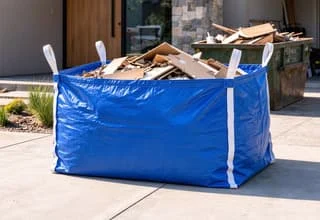
Dumpster Bag
A heavy-duty open-top bag for construction, yard and mixed waste, lifted on four corner loops or a stevedore strap. It…
View product →QINFENG Custom FIBC manufacturer since 2001
PP RUBBLE CHUTE
For construction waste and material handling. Customized diameters, lengths and connections for distributors, equipment suppliers and project requirements.
220 GSM Fabric Option OEM Manufacturing Custom Diameter & Length
Why use a PP Rubble Chute
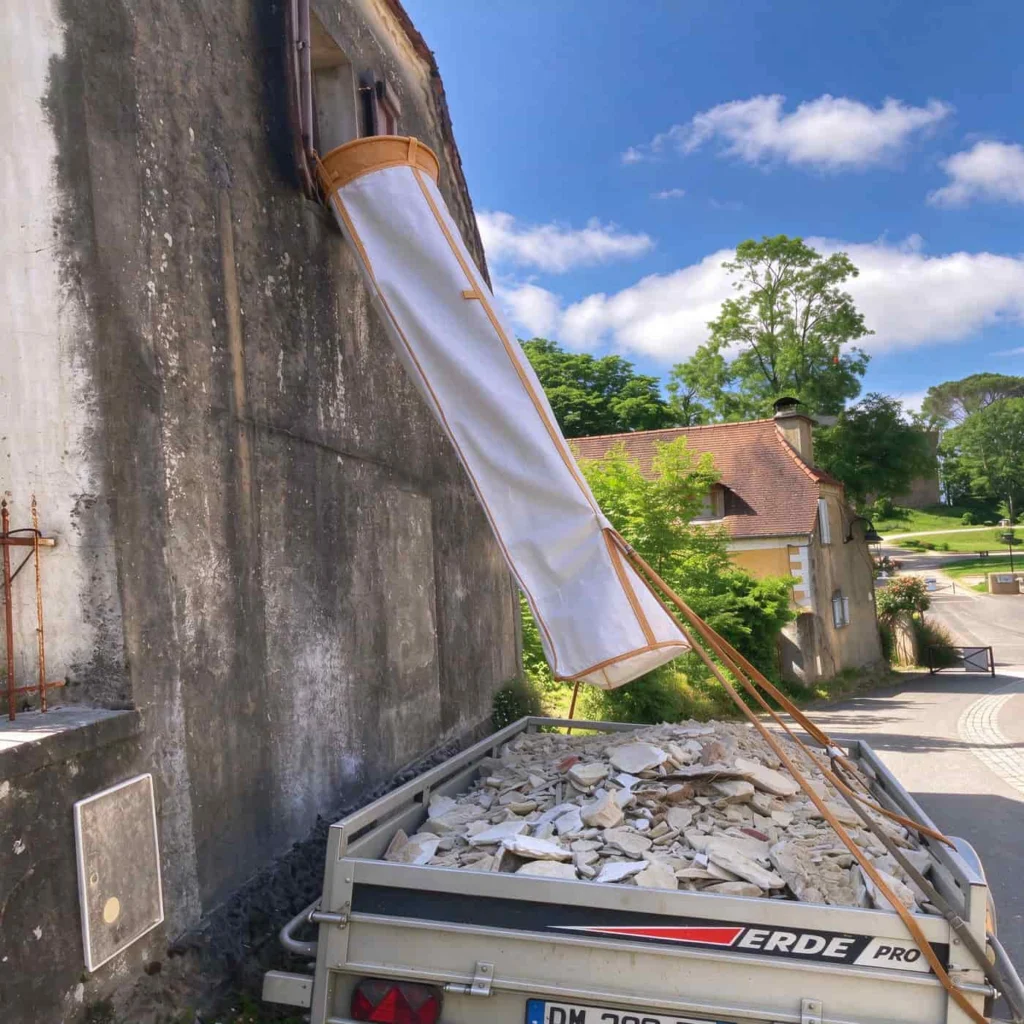
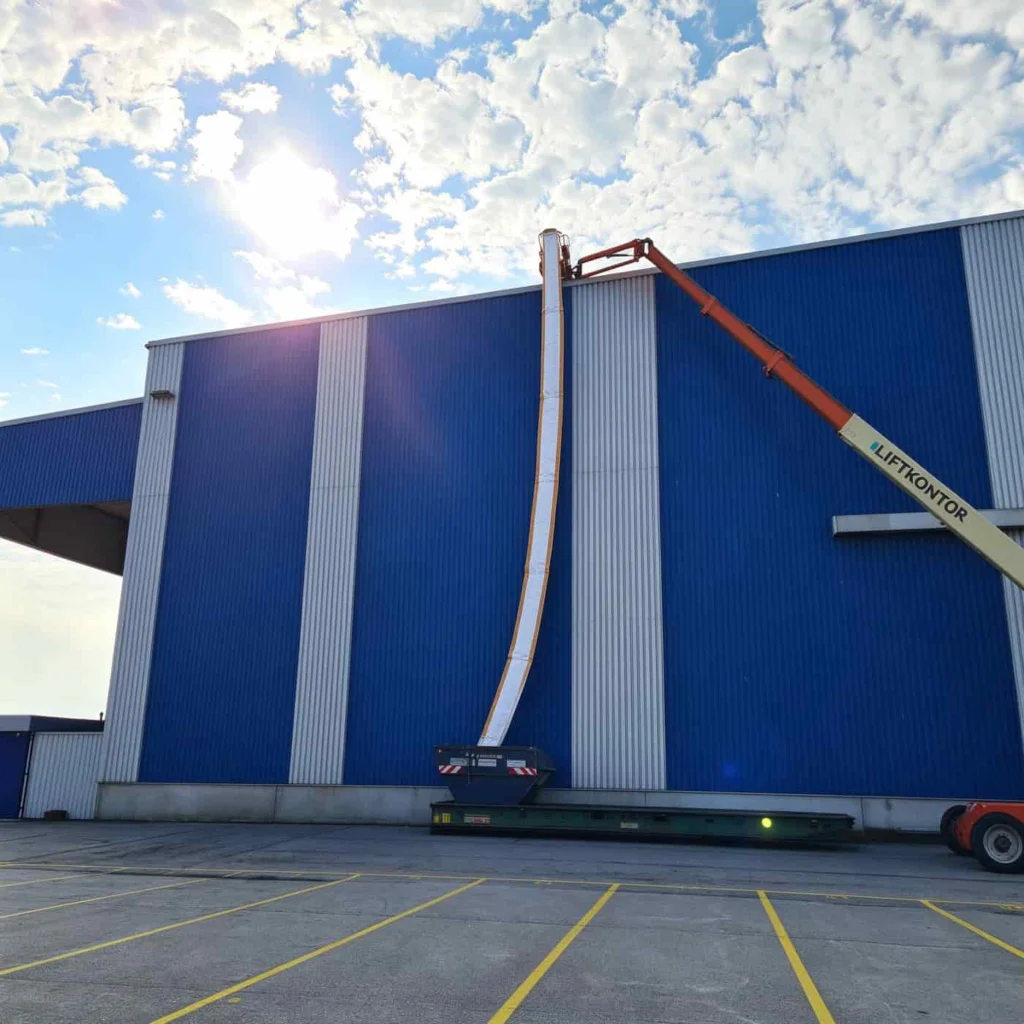
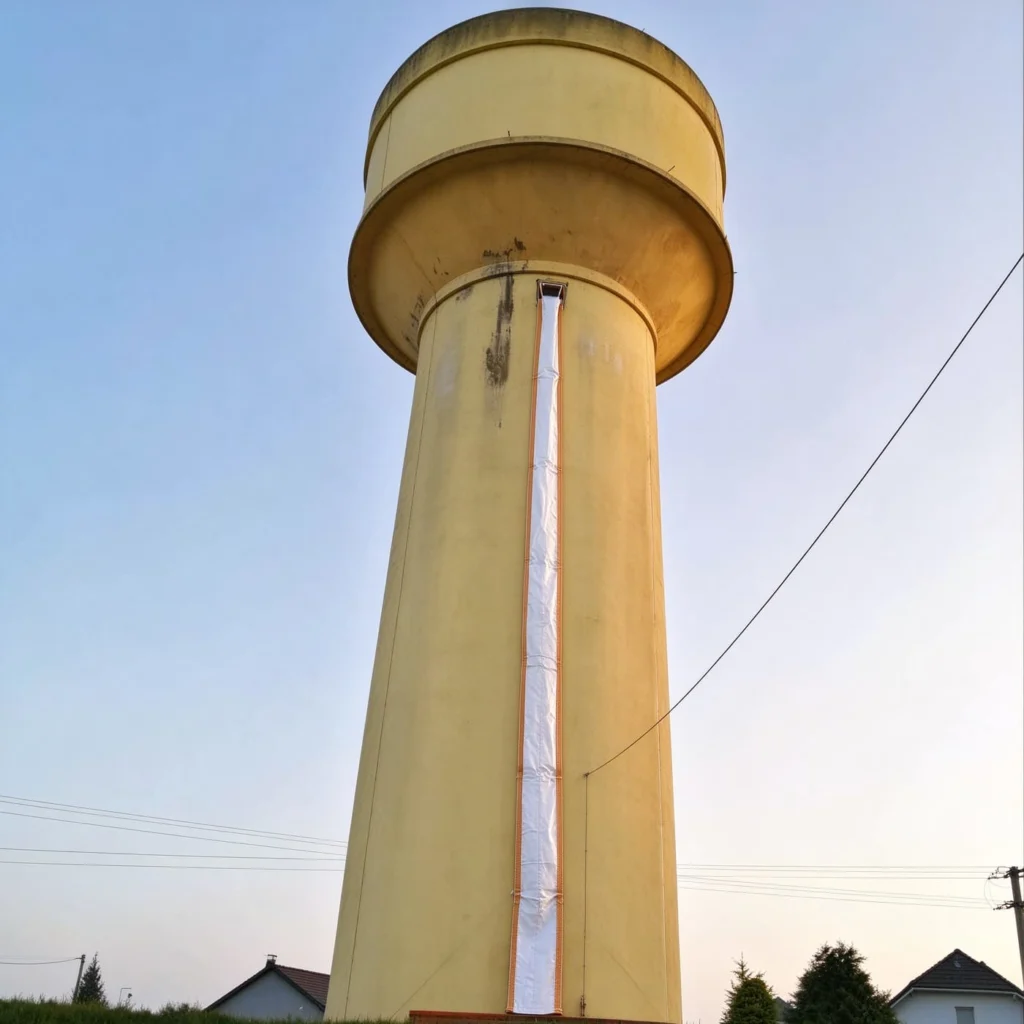
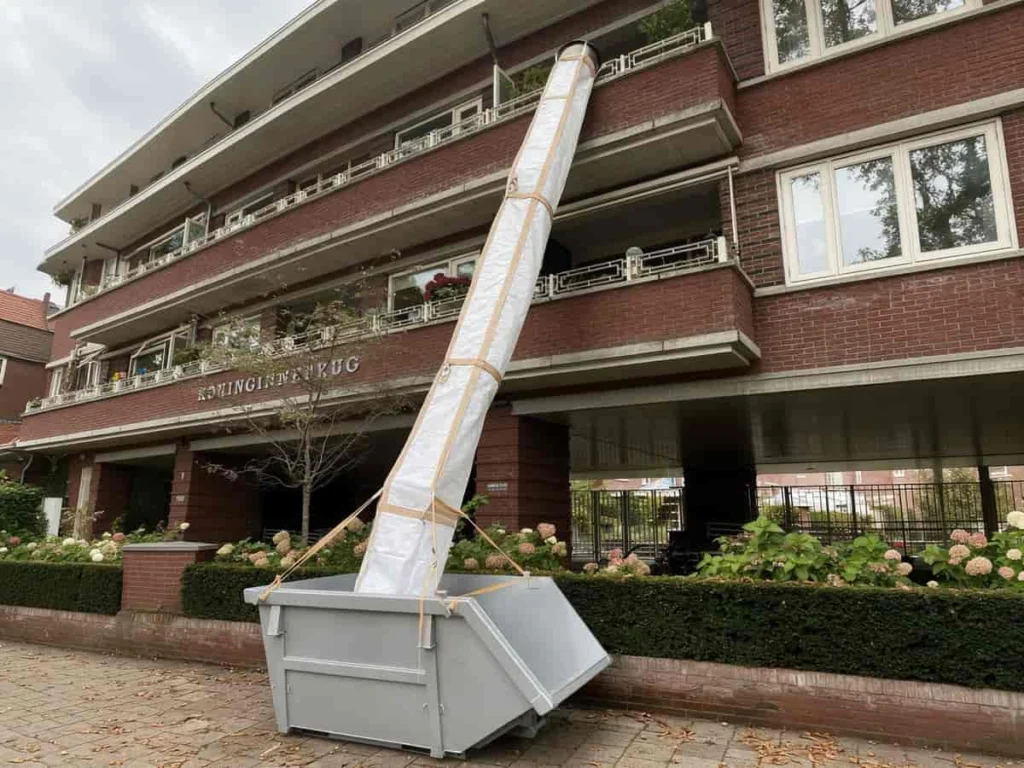
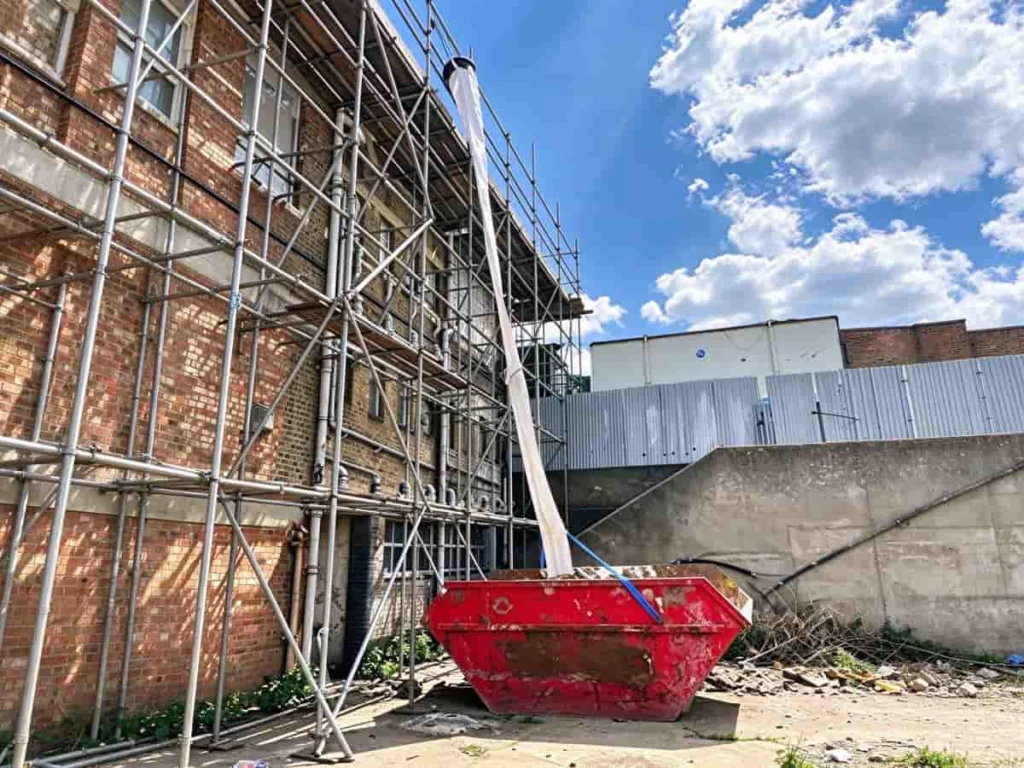
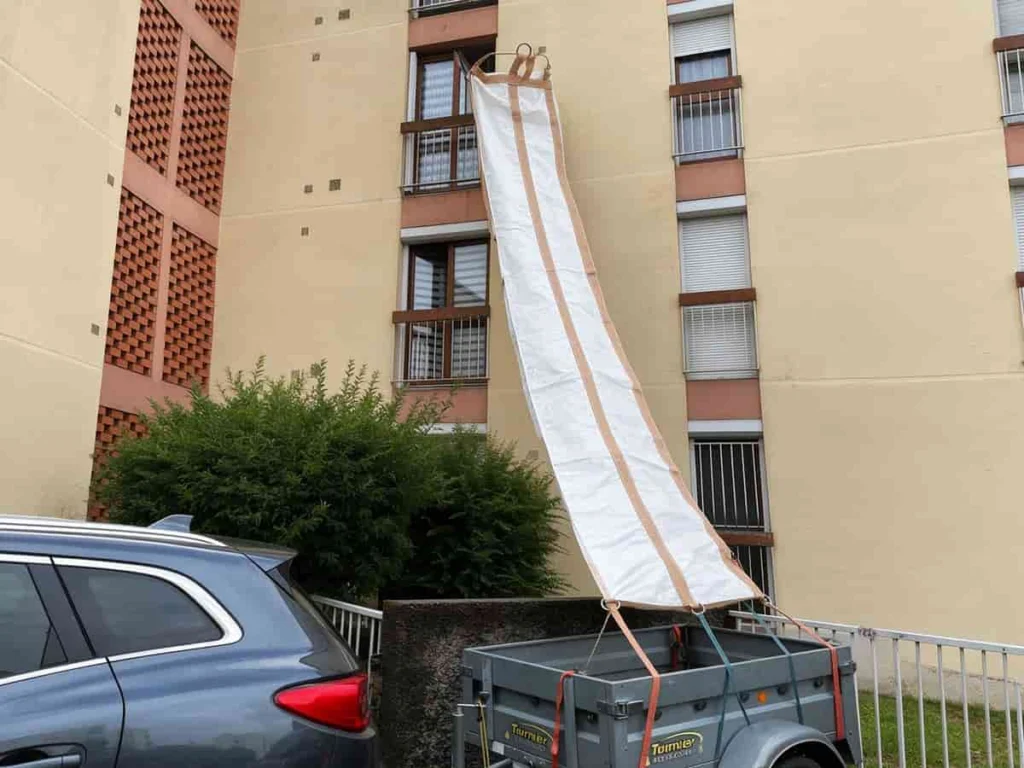
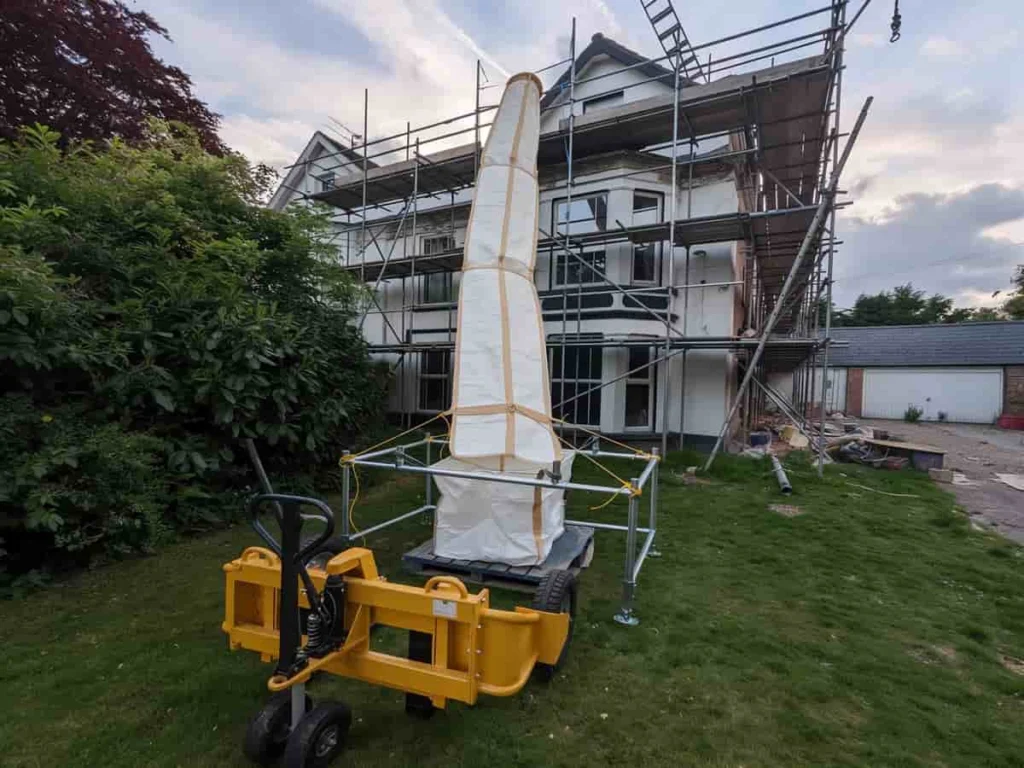
A flexible PP rubble chute provides a controlled route for moving construction debris and loose materials from elevated working areas to a collection point below.
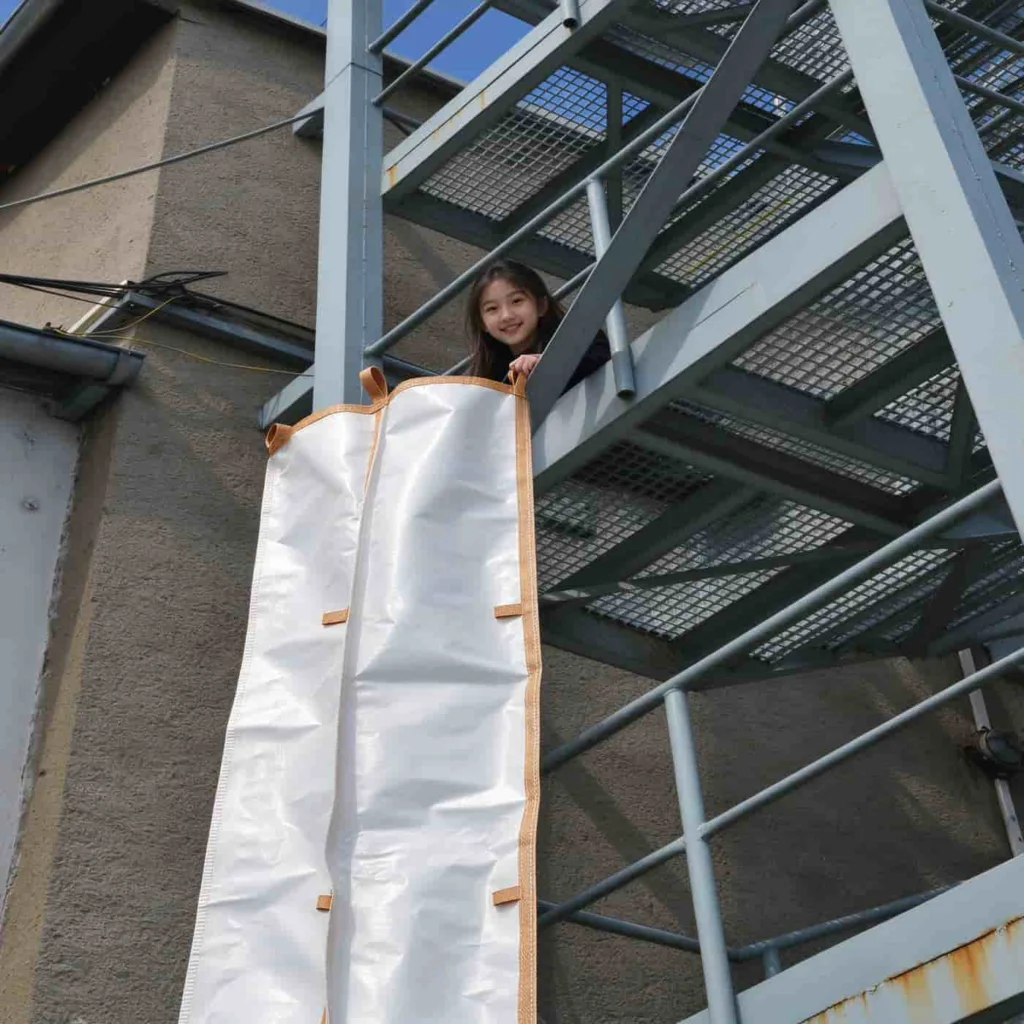
Its lightweight woven construction can be folded for transport and storage, while custom diameters and lengths allow the chute to be matched to different site requirements.
How it is set up on the bay
A disposable woven chute that carries product from an FIBC outlet down to a truck or hopper without dust or breakage.
 01
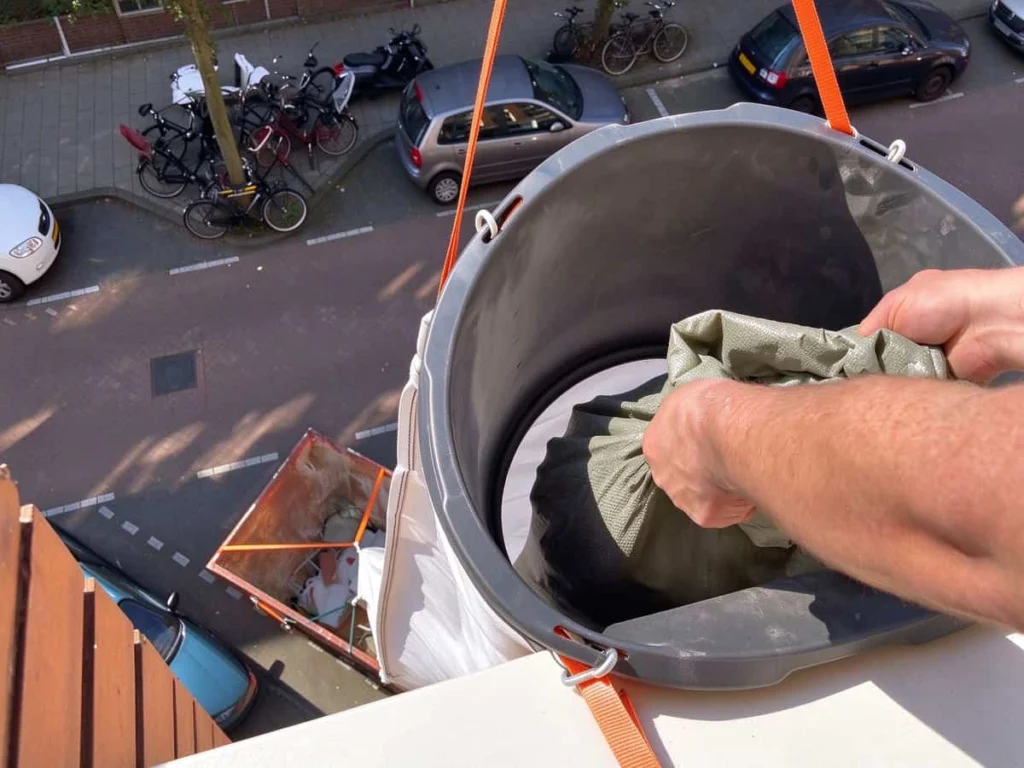
The chute's loops snap onto the hooks of the filling funnel, so the mouth stays open and the chute hangs straight without tools. It can be tied straight to the outlet instead, but nothing holds the mouth open while it is loaded.
 02
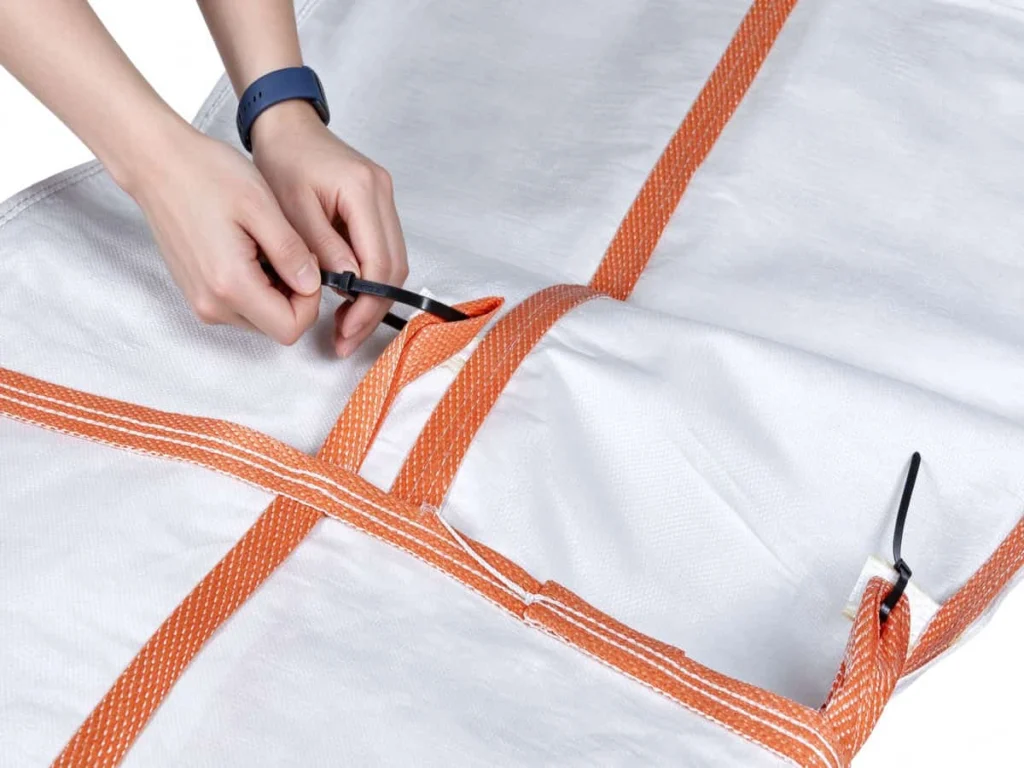
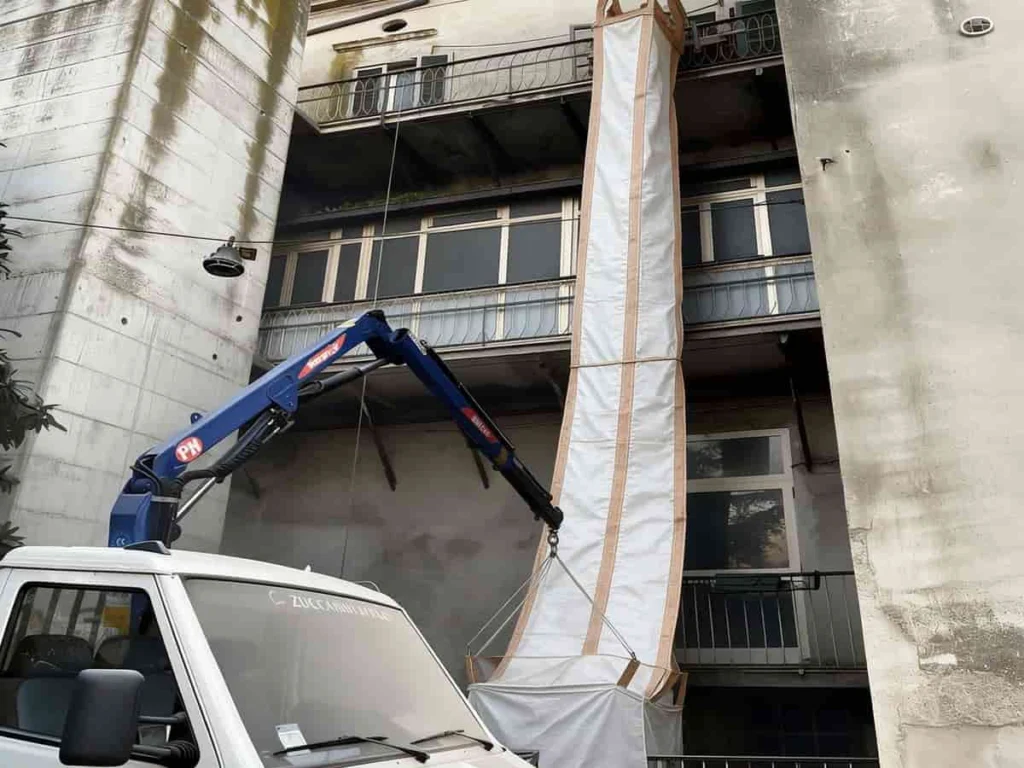
Sections join with the cable ties supplied — three metres each, one per storey, and two, three or more of them added until the run reaches the height of the drop. Where the bay is lower, the last section is cut down. A chute woven in one continuous length needs no join at all.
 03
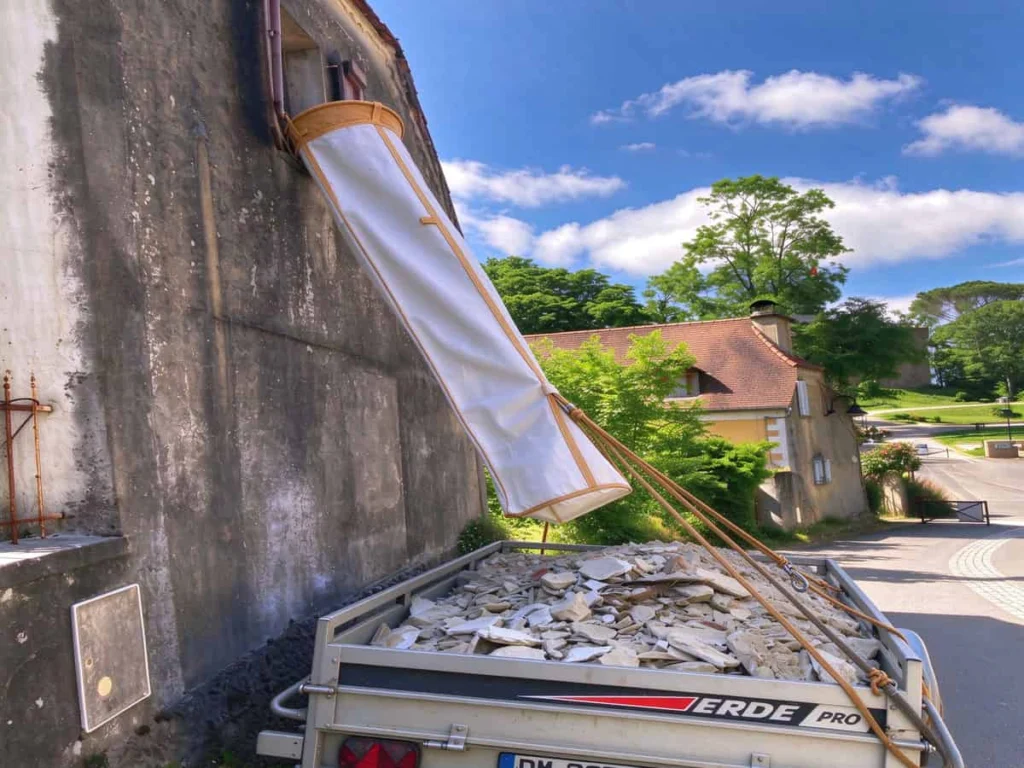
Hang the open end no more than 50 cm above the skip, barrow or other container — not higher. Keep the run as vertical as possible and free of kinks, then tip the rubble in by bucket, barrow or by hand.
Flexible chute vs rigid chute
| Flexible PP Chute Clipped to the outlet | Flexible woven tube | Folded or rolled | Compact when folded | Custom or modular | Based on material and setup |
|---|---|---|---|---|---|
| Rigid Chute Bolted in place | Rigid sections | Stacked sections | More storage space | Modular sections | Based on site and system |
| Compared on | Structure | Storage | Transport | Length | Application |
Cut to the drop height and the flow rate of the product; the diameter follows the outlet spout it has to fit.
Applications
Wherever material has to come down from a height and the container is already on the ground, a tube is the shortest way to get it there.
 01
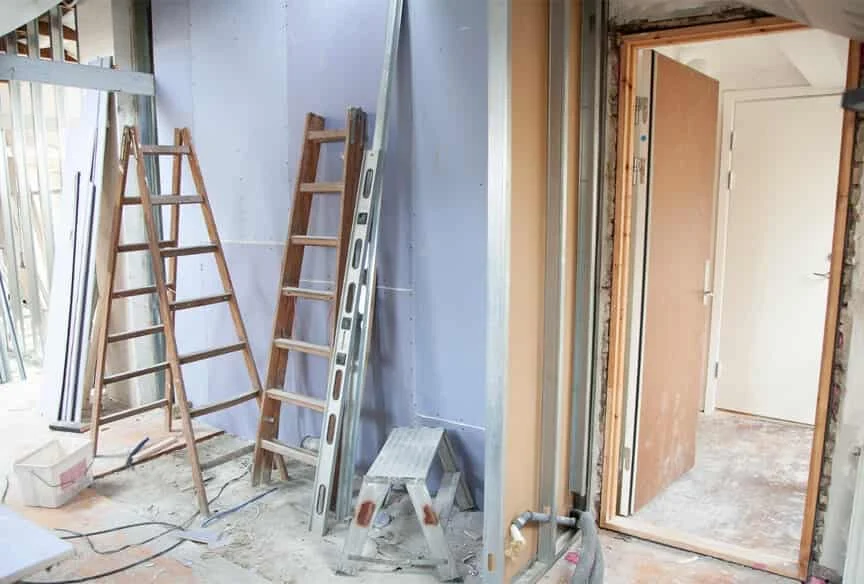
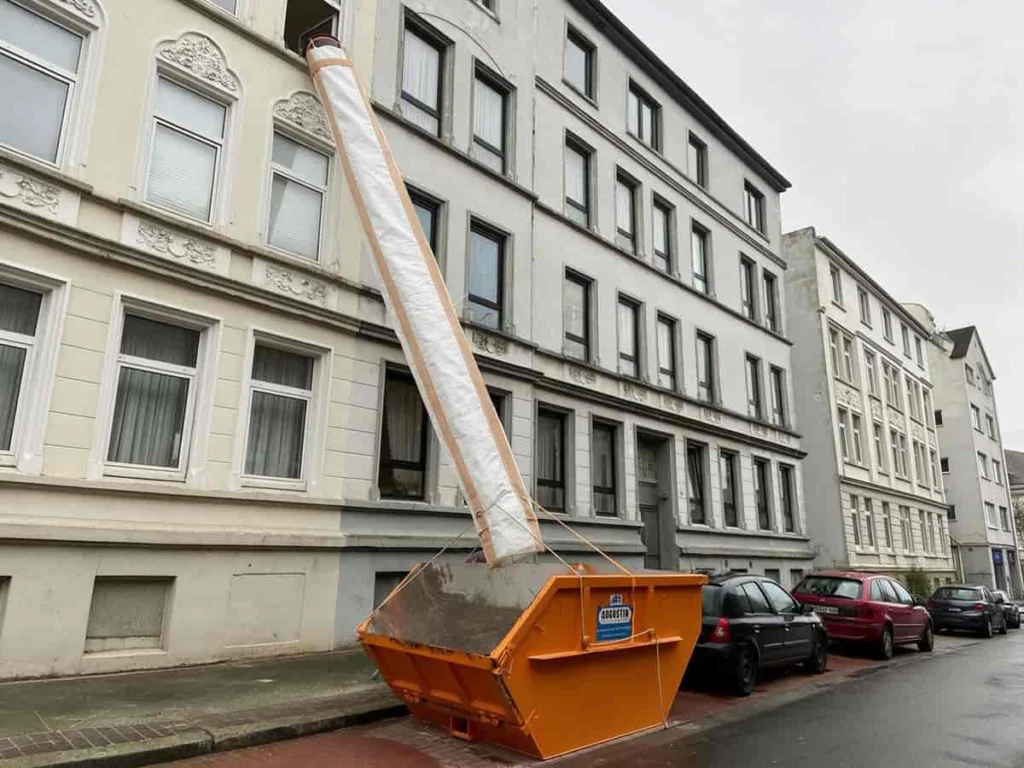
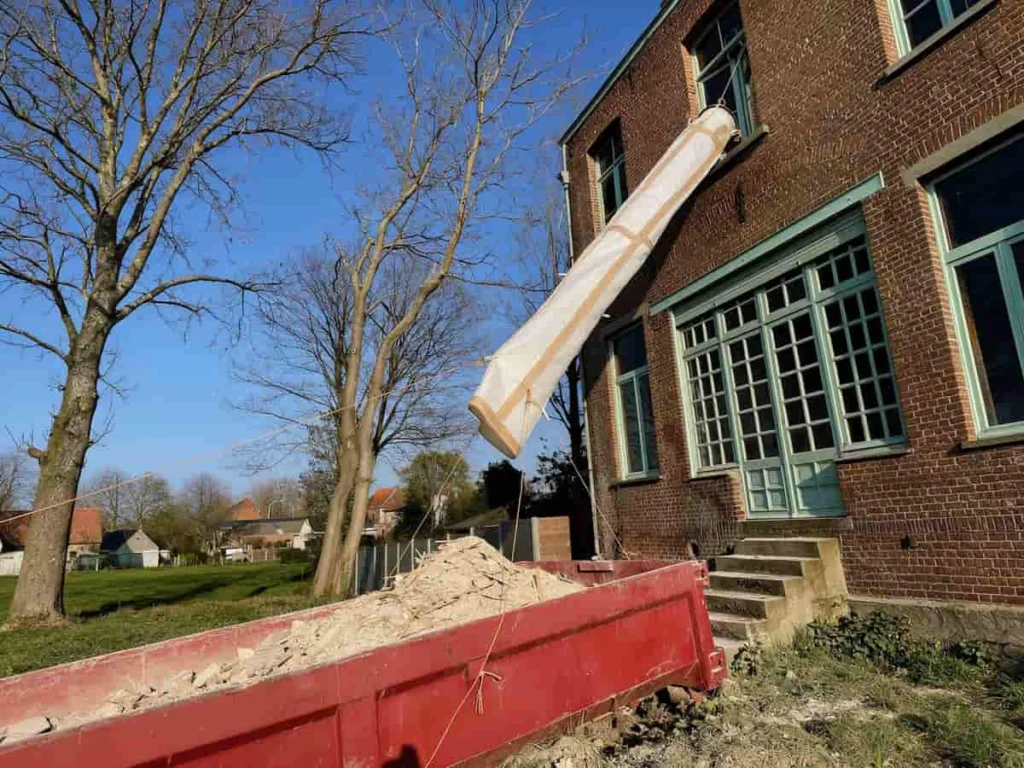
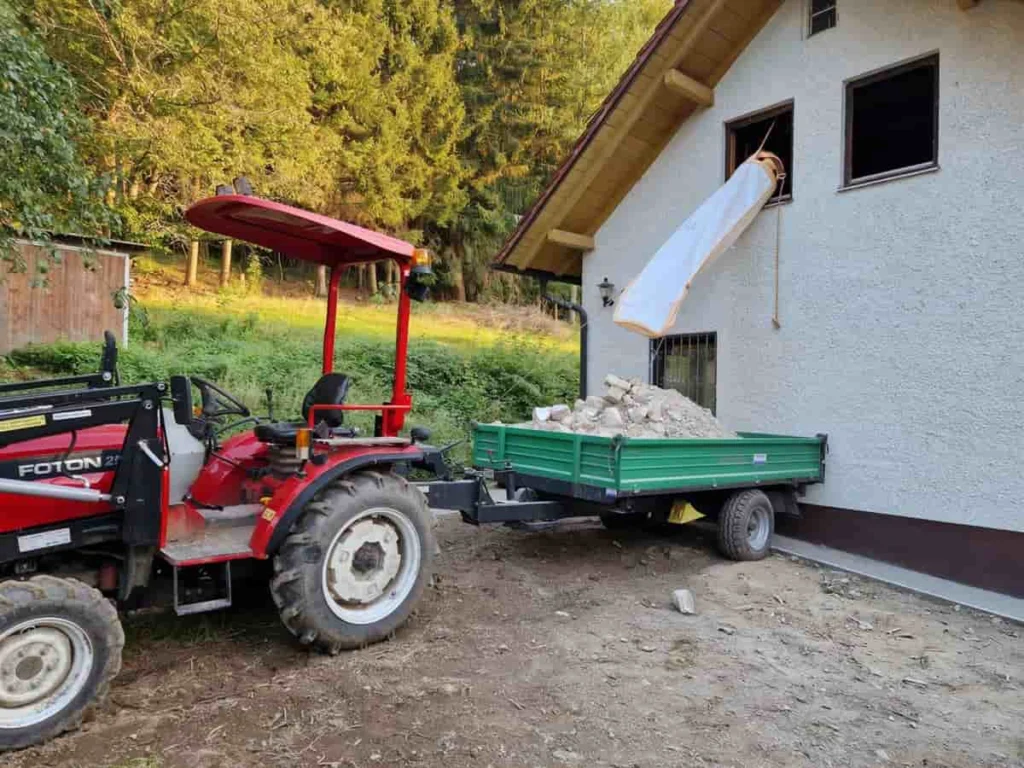
Moving broken bricks, concrete fragments and general construction debris to a collection container.
 02
Removing tiles, plaster and renovation waste from elevated working areas.
 03
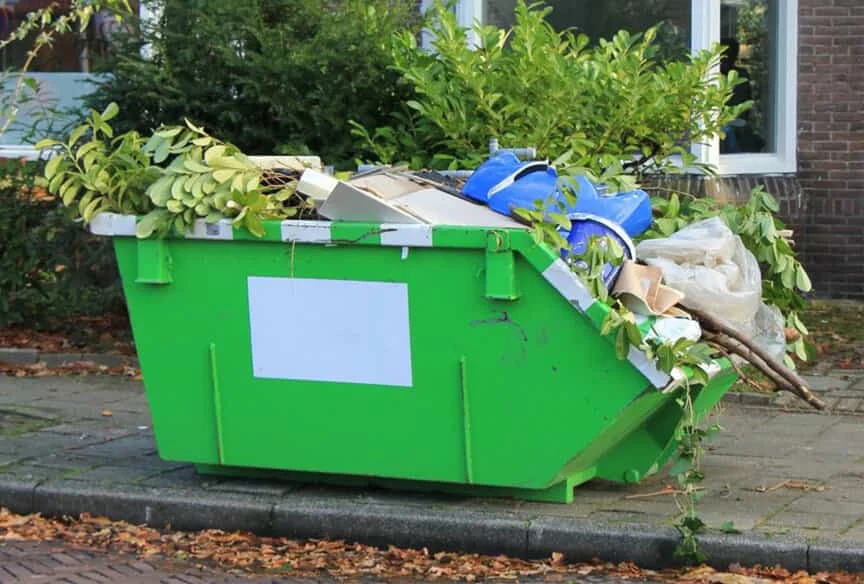
Directing loose roof gravel and similar materials towards a designated collection point.
 04
Transferring compatible loose materials from hoppers or bulk bag outlets to collection points, where the chute configuration permits.
Start from the standard 60–90 cm diameters and the drop height on the bay, then set the fabric, the connection and the packing against how the chute is filled and taken down.
Need it matched to a bay already in use? Send the drop height, the outlet it has to fit and the container it discharges into. Get a quote →
On site
Loading, lifting and standing full — the conditions the specification is written for.
1 / 8
Purchasing FAQ
60–90 cm in diameter is the standard range, and the diameter is chosen to go over the outlet spout rather than to a round number. Length is cut to the drop: standard sections are 3 metres each, and a chute can also be woven as one continuous length for the full height from outlet to container. Send the spout opening and the vertical drop and the size is settled from those two figures.
Yes. A run can be supplied as 3-metre sections joined on site, or woven in one continuous length with no join in it. Sections are the flexible order — a short bay takes fewer, a tall one takes more, and the last section is cut down — while a continuous length is made to one drop height and has no join to watch. Tell us the heights you have to cover and which of the two suits them.
The body is 220 GSM woven polypropylene, and lamination is an option rather than a rule. Laminated is the build for fine powders and dusty granulates: the coating closes the weave so the material does not sift through the fabric on its way down. Unlaminated is the plainer, cheaper chute and is enough for rubble, gravel and other coarse debris, where dust at the outlet is not the problem you are solving. Neither build is a sealed system — a chute reduces dust at the outlet rather than containing it.
A chute is bought as a consumable, so it is judged by how many drops it takes before the wear points give: the mouth where the load enters, the stitched seams, and wherever the tube rubs against a skip, a wall or a scaffold. The 220 GSM woven body and the stitched seam take broken brick, tile and plaster. Sharp reinforcement, glass and long metal offcuts cut the weave whatever the fabric weight, so those loads want a heavier fabric, the mouth checked after each use, and the run kept as vertical and as clear of rough edges as the site allows.
Sections are joined on site with the ties supplied with them, section end over section end, with no tools and no frame, and they come apart again when the run is taken down. Two or three sections reach most drops, and where the bay is lower than a whole number of sections the last one is cut down. If you would rather have no join at all in the run, order the drop as a single continuous length instead.
The top can be a tie collar laced to the outlet spout, an elastic collar that grips it, or a clip ring that snaps on and off between bags on a busy bay. The bottom is normally the plain open end set over the skip, hopper or barrow, and a different outlet — a flange, a fixed spout, a hopper mouth — is specified from your drawing. The connection detail is confirmed on the drawing before production, so what is made matches what is on the bay.
Printing is available on the woven body, in your colours and to your artwork; the position is agreed from the drawing, because the chute is a narrow tube and the panel has to stay readable when it hangs. Send vector artwork (AI, EPS or PDF) with the colour references, and a proof comes back with the quotation. A printed run carries its own minimum quantity and a plate charge, both quoted with the order, which is why a plain chute and a printed one are priced separately.
The minimum moves with the specification — diameter, drop height, number of sections and whether the run is printed — so it is quoted with the price rather than fixed on this page. A chute sample is not free: it is woven to your diameter, length and connection rather than taken off a shelf, so send those three figures and the sample fee is quoted against them. Once the fee and the specification are confirmed, a sample takes about 5–8 days to make, and the courier is paid by the customer. Production lead time is stated in the written quotation, once the specification and artwork are agreed — we do not give a rush date before the factory has confirmed capacity.
Specialty bags
A heavy-duty open-top bag for construction, yard and mixed waste, lifted on four corner loops or a stevedore strap. It…
View product →
A woven bag with mesh panels or a perforated body so air moves through the load. It is specified for…
View product →
A woven bag made with geotextile fabric so water drains out while the solids stay in. It is sized from…
View product →
A fabric bag placed where concrete wagons are washed out, so solids settle and the water can be handled separately.…
View product →/ Request a quote
Tell us your requirements. Our team will help you confirm the right chute configuration.